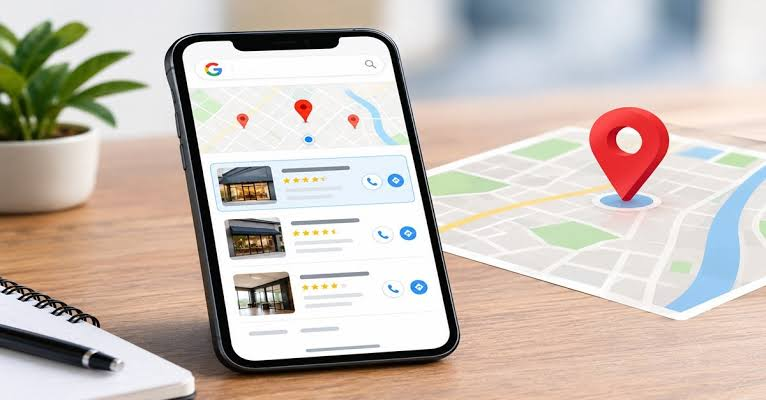
You search for your own service in your own town, and the map at the top of the page shows three competitors. Your business isn’t there. Maybe it’s on page two, or maybe it doesn’t show up at all. For a local business, that map is often where the phone calls come from, so being left out of it costs real money.
The local pack is the group of three businesses Google shows next to a map for searches with local intent, like “HVAC repair Manassas” or “family dentist near me.” Getting into that group depends on a mix of factors, and most of them are within your control. An experienced SEO agency in Virginia will usually trace a missing listing back to one or two specific problems, not a mystery.
This article covers the most common reasons businesses get left out of the local pack and what you can do about each one. Some fixes take an afternoon. Others take months of steady work. Knowing which is which helps you decide whether to handle it yourself or bring in an SEO agency in Virginia to work through it with you.
How Google decides who appears
Google has said publicly that local results are based mainly on three things: relevance, distance, and prominence. Relevance is how closely your business matches the search. Distance is how far you are from the person searching, or from the location named in the search. Prominence is how well known and trusted your business appears, based on reviews, links, articles, directory listings, and other signals.
Every reason below connects to one of those three. If you understand which one is weak, you know where to focus.
Your profile isn’t verified or is incomplete
The most basic problem is also one of the most common. If your Google Business Profile hasn’t been verified, it won’t appear reliably in local results. Verification confirms that you own and operate the business at that location.
Even verified profiles often sit half finished. Missing hours, no photos, a blank business description, and no list of services all make the profile less useful to searchers and less likely to rank. Fill in every section that applies to your business. Add services and products with real descriptions. Upload photos of your location, your team, and your work. Keep your hours accurate, including holiday hours.
You picked the wrong primary category
Your primary category tells Google what your business is. It’s one of the strongest relevance signals you control. If a personal injury law firm lists “Lawyer” as its primary category instead of “Personal injury attorney,” it may lose ground to competitors who chose the more specific option.
Review your primary category against the businesses that do appear in the local pack for your main search terms. Secondary categories can cover additional services, but only add the ones you actually offer. Piling on loosely related categories can confuse relevance instead of helping it.
Your business is too far from the searcher
Distance is the factor you can’t change much. If your office is in Herndon and someone searches from Fredericksburg, nearby businesses will usually win, no matter how strong your profile is.
This explains why rankings often look different depending on where you check them. You might rank first from your office and not appear at all ten miles away. That’s normal. The goal is to rank well across the area you realistically serve, not across the entire state.
Strong prominence signals can stretch your reach a bit. Businesses with many reviews, solid links, and a well-built website often show up in the map from farther away than weaker competitors do. But a single location won’t dominate the map in every town, and no legitimate tactic changes that.
Your name, address, and phone number don’t match across the web
Google cross-checks your business information against other sources, like directories, industry listings, and data aggregators. If your address appears three different ways, or an old phone number still shows up on several sites, that inconsistency weakens trust in your listing.
This often happens after a move, a rebrand, or a change in phone systems. Old listings stay online for years unless someone corrects them. A citation cleanup finds those listings and updates or removes them so every source tells the same story.
You have too few reviews, or old ones
Reviews affect both prominence and the click-through rate on your listing. When an SEO agency in Virginia compares a client to the businesses already in the map, review strength is often the widest gap. A business with eight reviews from 2021 will struggle against a competitor with 150 recent ones. Quantity matters, but so do recency and the content of the reviews.
Build a simple, consistent process for asking customers to leave reviews. Ask at the moment the customer is happiest, such as right after a job is finished or an issue is resolved. Make it easy by sending a direct link. Reply to every review, and keep replies professional when the feedback is negative.
Never buy reviews, offer incentives for positive reviews, or write them yourself. Google’s policies prohibit those practices, and fake reviews can lead to removed reviews or a suspended profile.
Your website doesn’t support your profile
Your profile and your website work together. Google looks at your site to confirm what you do and where you do it. If the website linked from your profile is thin, slow, or vague about your services and location, your map rankings will suffer.
Link your profile to a page that clearly describes the location and the services offered there. For a single-location business, that may be the homepage. For multiple locations, each profile should link to its own location page. That page should include the business name, address, and phone number in text, an embedded map, local details, and content that matches the services in your profile.
You have duplicate or conflicting listings
Duplicate listings for the same business at the same address split your signals and confuse Google. They often appear when a former employee created a listing, when an old listing was never removed after a move, or when someone set up separate listings for each service.
Search for your business name, phone number, and address to find duplicates. Report them through Google’s support channels so they can be merged or removed. Multiple practitioners at one location, like doctors or attorneys, are handled under specific rules, so check those guidelines before creating individual listings.
Your profile was suspended or filtered
Sometimes a business disappears from the local pack suddenly. That can point to a suspension, which usually follows a guideline violation. Common causes include adding extra keywords to the business name, using a virtual office or mailbox as an address, or listing an address for a service-area business that doesn’t serve customers there.
Google can also filter listings that look too similar to another business nearby, such as two offices of the same company in one building. Filtering isn’t a penalty, but it has the same effect on visibility.
If your profile was suspended, fix the underlying issue before requesting reinstatement. Submitting a request without correcting the problem usually leads to a denial.
Competitors are breaking the rules
Some competitors stuff keywords into their business names, list fake addresses, or run multiple listings for one location. These tactics can win temporarily. You can report clear violations through Google’s tools, and many get corrected. Reporting won’t build your own visibility, though, so treat it as a side task while you strengthen your profile.
Quick checklist for getting into the local pack
If you’re not sure where to start, work through this list in order:
- Confirm your profile is verified and every relevant section is filled in
- Check that your primary category is the most specific accurate option
- Search for duplicate listings and request removal or merging
- Make your name, address, and phone number identical across major directories
- Set up a steady review request process and respond to every review
- Link your profile to a strong, location-specific page on your website
- Add fresh photos and post updates regularly
- Review the business name field to make sure it matches your real-world name exactly
How long fixes take to show
Simple corrections, like category changes or verification, can affect visibility within days or weeks. Citation cleanup and review growth take longer, because the improvements build gradually. Website and content work usually takes a few months to register fully.
Track your progress from several points across your service area, not just from your office. Map rankings vary block by block, so a single check rarely tells the whole story.
Be careful about changing too much at once. If you rename your business, switch categories, and edit your address in the same week, the profile may be flagged for review, and you won’t know which change helped or hurt. Make updates in a sensible order and give each one time to settle. Keep a simple log of what changed and when, so you can match shifts in visibility to the work behind them.
Getting back on the map
Missing the local pack is frustrating, but it usually has an identifiable cause. Profile gaps, category choices, inconsistent listings, weak reviews, and website issues explain most cases, and each one has a clear fix. 321 Web Marketing helps local businesses find those gaps and close them with a plan built around the areas they actually serve. If your competitors keep showing up on the map while you don’t, contact 321 Web Marketing to find out what’s keeping your business out of view.
About the Author